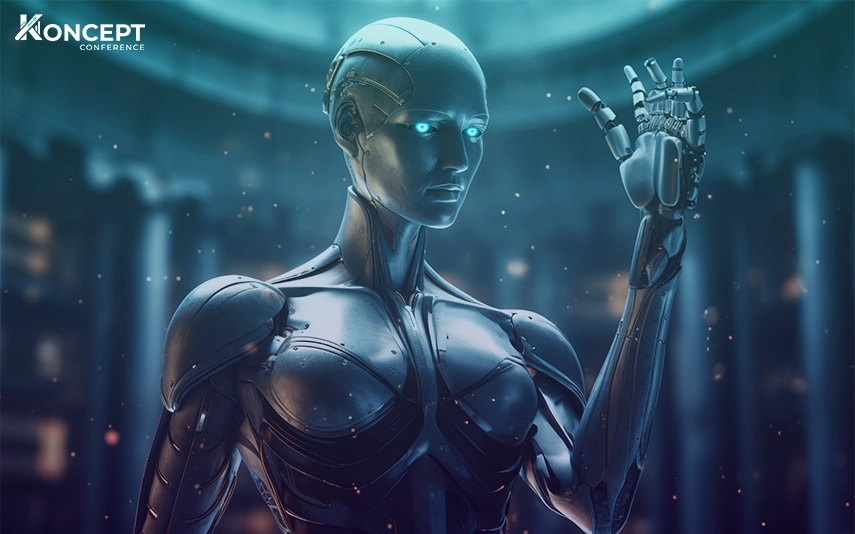
Humanoid Robots in Everyday Life: 2026 Reality or Still Futuristic?
March 3, 2026
Summary: Humanoid robots move steadily from controlled labs into real environments. Enterprises, policymakers, and innovators evaluate readiness, ethics, and scalability. Discussions at corporate leadership conference forums and technology conferences in Dubai platforms reflect growing interest in robotics as a workforce enabler. This article examines progress, limitations, and realistic expectations shaping humanoid robots in everyday life by 2026.
Humanoid robots attract attention as symbols of advanced automation and artificial intelligence. Engineers design these systems to replicate human movement, perception, and interaction. Conversations emerging from global tech Conference in Dubai agendas and strategic forums highlight a shift from experimental robotics to applied humanoid use cases. Alongside this momentum, technology conferences in Dubai sessions emphasize practical deployment, governance, and long-term value creation.
What Defines a Humanoid Robot?
Humanoid robots have a human-shaped form, which usually has a head, a torso, arms, and legs. This is the structure that designers are seeking to allow robots to work in the human-constructed environment. These robots combine computer vision, natural language processing, force control, and reinforcement learning to execute their duties with higher levels of autonomy. The teams of researchers pay attention to the balance, dexterity, and contextual perception but not to visual resemblance.
Current Capabilities in 2026
Humanoid robots by 2026 show some improvement in mobility, manipulation, and interaction. Sophisticated actuators permit comfortable walking and manipulation of objects. Vision systems recognize the obstacles and modify the movement routes. In the controlled working environments, humanoids assist in logistics, inspection, and repetitive assembly. The use of robots in technology conferences in Dubai events does not always have robots replacing humans but working with them.
Everyday Use Cases Gaining Traction
The humanoid robots are piloted in a semi-structured environment of several industries. Picking and in-house transportation are implemented by warehouses. Robots are tested in healthcare facilities and guided by patients and delivering equipment. Multilingual robots are also investigated by hospitality organizations. Such deployments are aimed at uniformity and safeguarding instead of innovation. The lessons presented during the panels of the corporate leadership conferences emphasize the need to align business goals with robotic ability.
Challenges Slowing Mass Adoption
Humanoid robots are limited in spite of apparent improvements. Scalability is constrained by high costs of production. The issue of energy efficiency is still a consideration of a long operation. The perceived models are still challenged by the reality of unpredictability. Acceptance of the workforce and regulatory clarity is also done by organizations. In various forums at a technology conference in Dubai, leaders who talk about robotics mention that the complexity of integration is bigger than the hardware preparedness in most cases.
Ethics, Trust, and Governance
Humanoid robot adoption is affected by the level of public trust. Procedural policies on data privacy, accountability of decisions, and human control are also necessary. Companies embrace open governance systems in order to establish the roles and restrictions of robots. Certain policy makers work with the technologists in order to create safety certifications and ethical guidelines. These issues are being discussed very often at strategic discussions at the conferences of corporate leaders.
Are Humanoid Robots Ready for Homes?
Domestic humanoid robots remain limited to early trials. Although prototypes are efficient in the performance of household functions, their mainstream implementation is limited by cost and reliability. The developers are concerned with the support of the elderly, mobility, and companionship features. Analysts agree that specialized service robots are better in value than general-purpose humanoids in residential environments.
What 2026 Realistically Represents?
The year 2026 is the year of transition and not transformation. Robots that are humanoid shift the emphasis from spectacle to selective use. Organizations that make investments today receive the advantage of operational understanding and strategic benefit. Adoption is a gradual process that begins with the controlled environment and increases in gradual steps with the improvement of reliability. Innovation rewards companies that are ambitious and practical in their implementation.
Conclusion
Humanoid robots no longer belong solely to speculative futures. Their presence in workplaces reflects practical experimentation and strategic intent. As conversations at global tech Conference in Dubai and corporate leadership conference platforms indicate, success depends on responsible integration and clear value definition.
Join the future of tech leadership, register now with the Koncept Conference!
Frequently Asked Questions
1. Do humanoid robots replace human workers?
Humanoid robots assist human beings in performing monotonous or hazardous tasks. They are implemented by organizations to make them more productive rather than eliminate roles.
2. Which industries adopt humanoid robots first?
The early adoption is carried out by logistics, manufacturing, healthcare support, and hospitality because of the organization of working processes and the obvious advantages of efficiency.
3. Are humanoid robots safe to work alongside people?
The developers of modern humanoid robots equip them with sensors, force limits, and safety measures that facilitate collaborative operation.
4. When will humanoid robots enter households widely?
Widespread home adoption remains several years away, pending cost reduction, reliability improvements, and clearer consumer value.
5. How should leaders prepare for humanoid robotics?
Pilot programs, workforce training, and governance planning discussed at technology conferences in Dubai and world innovation forums are also relevant to the leaders.
Interesting Reads:
Remote Work to Distributed Intelligence: The Future of Digital Leadership
Beyond Automation: The Way Tech Leaders are Setting Up Human-AI Collaboration Models