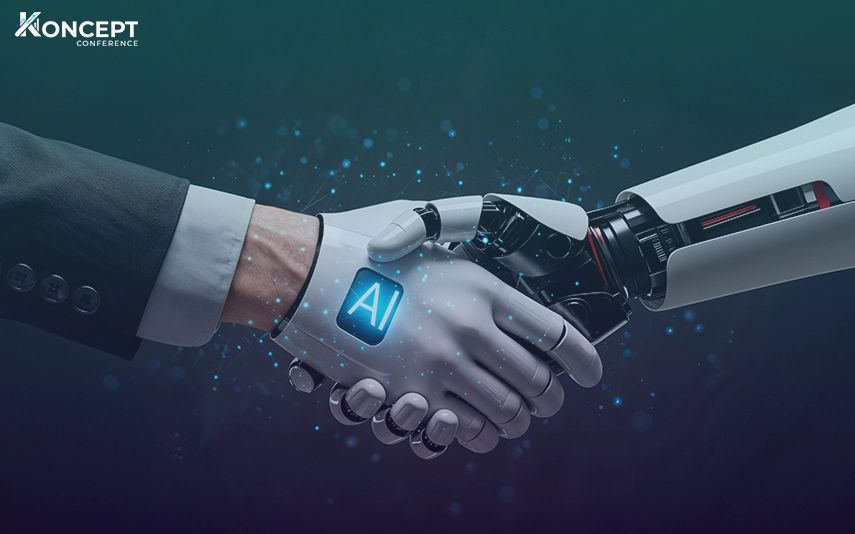
Beyond Automation: The Way Tech Leaders are Setting Up Human-AI Collaboration Models
February 26, 2026
Summary: Modern organizations are being redefined through the collaboration of humans and AI. Going deeper into automation, technology leaders are coming up with more organized workflows, in which AI complements human creativity, judgment, and strategy. Governance, transparency and maturity of leadership is making businesses turn AI more into a cost-saving tool than an innovation powerhouse and competitive advantage.
Automation was the characteristic of the first wave of artificial intelligence in business. Monotonous work was made lean, the operational costs were lower and the efficiency metric was enhanced. However, automation was not all. Nowadays, progressive organizations are entering an even more advanced stage, which is the design of conscious human-AI collaboration models that will re-define the way work is done.
This transformation is not in terms of replacing people. It is concerned with redefining the connection between human and machine intelligence. In industries, tech leaders are designing systems in which AI supplements decision making, ramps up innovation and improves strategic thinking - and humans give judgment, ethics, creativity and contextual awareness.
It is no longer a question of what can be automated by AI.
Now it is: How can human beings and AI work together to create value?
Automation of the tasks to Cognitive Partnership
Conventional automation aimed at rule-based processes: inputting data, schedules, the creation of reports. The current AI systems are machine learning and generative model-driven at the cognitive level. They interpret trends, create insights and even solutions.
Nevertheless, AI does not have human intuition, emotional intelligence, and moral reasoning. Most effective models of collaboration acknowledges this difference. Instead of applying the concept of moving whole workflows to the machines, organizations are developing layered systems:
- AI is used to process large volumes of data.
- Human beings process results and arrive at conclusive decisions.
- AI improves outputs through human responses.
- Continuous improvement cycles help to improve both sides.
- This arranged partnership generates compounding returns.
The key message that executives at the big tech leadership conferences have been repeating over the years is that augmentation is better than automation. The leaders are also seeking investments into hybrid operating models in which human skills and AI operations emerge strategically, not by chance.
The Structuring of Human-AI Workflows.
The collaboration between humans and AI is not a natural development. It cannot be just designed.
Tech leaders are utilizing the systems-thinking models to specify:
- Decision Boundaries What can AI autonomously decide on? Which must be approved of by humans?
- Escalation Protocols- AI goes to human review when uncertainty surpasses a limit.
- Feedback Loops - AI systems are corrected by human operators, increasing the accuracy through time.
Ethical Oversight Mechanisms Governance boards in AI-driven decisions check the decisions made by AI against bias and fairness.
The AI integration brings about confusion rather than clarity without these structures.
Leading organizations do not consider AI as an invisible tool but a group member with specific roles.
Rethinking the meaning of Leadership in the AI Age
A combination skill set is needed in leadership in this new paradigm. Proficiency in technology is not enough. The leaders of the modern world should know:
- Data governance
- Model limitations
- Organizational psychology
- Change management
- Ethical AI frameworks
Global tech conference staff regularly stress at the international conferences and strategic gatherings that leadership maturity is what dictates AI success rather than technological capability. Organizational design is erroneous in companies which fail not due to the poor technology but due to faulty design.
The cooperation between humans and AI requires the cultural development. AI information must be trusted by employees but at the same time they have to think critically. Leaders should promote experimentation without wearing it out.
The Human Advantage: Context and Creativity
AI is good at pattern recognition. Humans are good at making meanings.
A good illustration is in the creative industries. AI is able to create design prototyping, write code and create marketing copy at scale. But it is human beings who create brand voice, read cultural subtext and evaluate emotional appeal.
This symbiosis can be seen through the prism of tech conference exhibitors, where companies demonstrate the use of AI-oriented tools that complement the work of humans, but not substitute human labor. There is an increase in the product demonstrations centered on the use of co-pilot systems, which are AI integrated in human processes.
The most innovative organizations consider AI as:
- A strategic advisor.
- A research assistant.
- A simulation engine.
- A creative collaborator.
- Not as a replacement of human judgment.
- Developing Trust by being transparent.
Effective collaboration is based on trust. When the logic of decisions is not visible, employees are unwilling to adopt AI.
Tech executives are prioritizing:
- Explainable AI systems.
- Clear policies of data usage.
- Well defined accountability frameworks.
- Constant training of employees.
Employees are more confident in their interactions with AI when they understand the way the latter arrives at a verdict.
In addition, human control is vital in life and death situations like in medical care, financial and governmental decision-making. AI can suggest, though it is human who will be accountable.
Organizational Designing in the Future
The collaboration between humans and AI needs a change in structure:
1. AI Integration Teams
Cross- functional teams that included data scientists, product leaders, legal experts and operations managers.
2. AI Literacy Programs
Training on a workforce-wide basis to assure that the employees know about AI strengths and limitations.
3. Ethical Review Boards
Mechanism of governance to check bias, compliance, and unintended consequences.
4. Redesign of Performance Metrics.
Measuring not only efficiency benefits but augmentation effect- creativity, speed of innovation, depth of strategy.
Companies that are looking into the future are integrating AI into their operating model and not considering it as an isolated project.
Conclusion
Days of pure automation are dying. The type of partnership between human intelligence and artificial intelligence is much more transformative and replaces it.
Tech leaders are no longer posing questions as to whether AI will define the future of work. They are already engineering that future, workflow by workflow, policy by policy and strategic framework by strategic framework.
Companies that invest in mindful teamwork model in the present time will determine the future of innovation in the future. Visit at - Koncept Conference
FAQs
1. What is the collaboration between humans and AI?
Human-AI collaboration is organized arrangements in which artificial intelligence assists and supplements human decision-making instead of substituting it.
2. What is the difference between collaboration and automation?
Automation aims at substituting routine work, whereas collaboration incorporates AI in decision making processes with the human knowledge.
3. Why leadership plays an important role in integration of AI?
Governance, ethical principles, workflow limitation, and cultural adoption are all defined by leadership and define AI success.
4. What are the most successful sectors of human-AI collaboration?
AI decision systems contribute greatly in the fields of healthcare, finance, marketing, product development and technology.
5. What can organizations do to instill trust in AI?
Through using transparency, explainability, clear governance policies and ongoing training of the workforce.
Interesting Reads:
Cost-Aware Cloud Architectures Using FinOps & AI Forecasting
Artificial Intelligence to Quantum Computing: The Trends that Rule the World Tech Awards of the Year