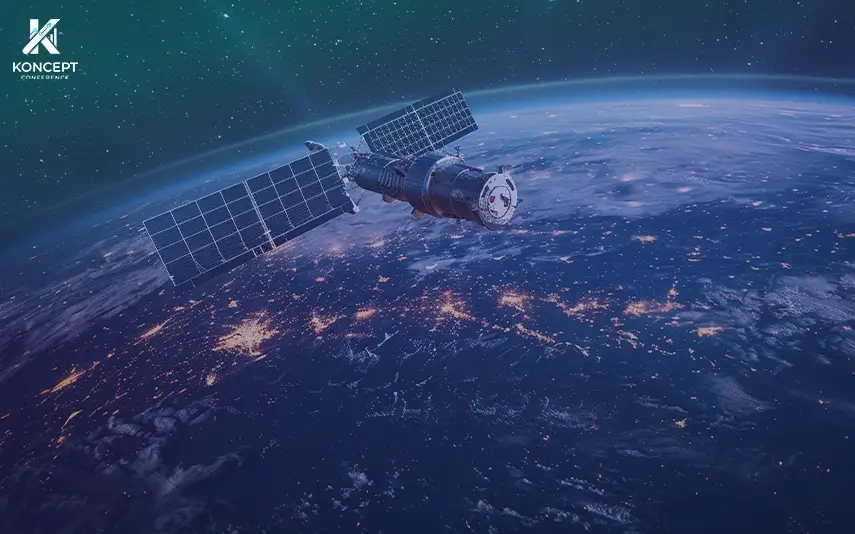
How Rapid-Design Satellites Are Changing the Space Race
December 26, 2025
Summary: Rapid-design satellites are reshaping global space innovation by enabling faster deployment, flexible mission planning, and intelligent automation. This shift unlocks wider access to orbital technology and supports advanced research across industries. Events like International tech conference sessions or discussions on Reasons to attend tech conferences often highlight this evolution. Platforms showcased at IoT conference Dubai reveal how accelerated satellite cycles empower enterprises and governments alike.
Introduction
Quick-design satellite engineering reinvents the way organisations design, test, and launch space enterprises. The cycles of development become shortened by several years to months and allow mission designers to work with amazing nimbleness. With the growth of launch provider reusable systems and the entry of AI-driven optimisation into the spacecraft design, the new age of high-speed satellite innovation puts communication, research, and security applications to the test.
The Rise of Rapid-Design Satellite Development
High-speed design processes are the product of intersecting sophisticated manufacturing, modular engineering, and automation. Firms do not follow a long-established pattern of development processes but rather use iterative, digital-first processes that simplify mission planning. Simulation-driven testing is embedded in the initial design stages by engineers, and this minimizes the physical tests on large-scale prototyping.
Modular Architectures Accelerate Innovation
The use of modular satellite structures makes the process of customisation easier and establishes effective assembly pipelines. The elements chosen by mission planners, including sensors, communication modules, and propulsion units, are determined by the changing needs. Modular engineering leads to experimentation since teams continually reuse without creating complete systems.
Digital Twins Enhance Design Precision
Digital twins are at the centre of satellite innovation at a high rate. Designers produce computerized models of entire spacecraft systems that model performance in a wide variety of conditions. These models enhance accuracy in tests, minimize downtimes, and promote quick approvals.
AI and Automation in Satellite Missions
Building of spacecraft, mission planning, and autonomous operations are improved with the help of AI. Predictive analytics help engineers to predict how the system will perform, as well as which areas of the system might fail.
Adaptive Mission Planning
Planning tools based on AI evaluate orbital paths, communication, and power limits. This knowledge allows on-site changes and enables smaller teams to operate more complex missions without any disruption to their operations.
Autonomous Onboard Decision-Making
The rapid-design satellites have autonomous systems that process the data during the progress of a mission. Such systems modify paths, streamline power consumption, and optimise payload. The shift of autonomy decreases the use of ground control and enhances responsiveness.
The New Space Supply Chain
The supply chain is dynamic and promotes launches faster, and also promotes experimentation. To ensure consistency even within high-volume production, manufacturers use additive production, precision robotics, and compact fabrication units.
Additive Manufacturing Shortens Production Cycles
Additive methods enable the teams to manufacture parts quickly without as many restrictions on the materials. The prototypes are tested and refined by engineers without having to wait until the manufacturing times.
Collaborative Ecosystems Improve Reliability
Research institutions, private companies, and launch providers are collaborating, which enhances innovation. Large-scale production is powered by shared knowledge, and risk is mitigated through shared missions.
Impact on Global Connectivity and Remote Sensing
Quickly designed satellites provide high-speed connections over long distances and allow real-time surveillance of the environment, agricultural, and emergency-response systems.
High-Throughput Communication Enables Broader Access
New constellations offer high-bandwidth features that sustain enterprise systems, navigation, and reliable communication networks. The ability to upgrade whole fleets at a time can be done through faster production cycles.
Enhanced Earth-Observation Capabilities
Improved remote-sensing technology records high resolutions of imagery with better frequency. The logistical, infrastructure, and climate research industries, among others, rely on this stream of insights at all times.
Conclusion
Rapid-design satellite technology shapes a future defined by agility, intelligence, and accessibility. Organisations that follow conversations at International tech conference gatherings or evaluate Reasons to attend tech conference programming notice how these systems influence global infrastructure. Insights shared at IoT conference Dubai sessions reinforce this shift toward rapid, scalable orbit-based solutions.
Join Koncept Conference 2026, where global innovators connect, collaborate, and shape the future of technology.
FAQs
1. How do rapid-design satellites improve mission timelines?
They decrease the development cycles through modular parts, automation, and test-driven simulation.
2. Why are modular satellites essential for future missions?
The modularity facilitates flexible configuration, minimizes production waste, and increases the speed of testing.
3. How does AI support satellite systems?
The benefits of AI include optimisation of design, autonomous decision-making, and responsiveness of missions.
4. What industries benefit most from rapid-design satellite technology?
There are significant benefits to telecommunications, research, defence, agriculture, and climate monitoring.
5. Do rapid-design satellites maintain reliability?
They maintain reliability when teams pair modular systems with thorough simulation, testing, and compliance checks.
Interesting Reads:
Early Bird Vs Last Minute Tickets to Global Tech Conferences
Why Dubai Is Becoming the Global Hub for Technology Conferences