Urban Air Mobility: Will Flying Taxis Become Mainstream?
May 11, 2026
City travel already feels crowded, and every commute seems longer than it should. Highways remain busy, and roads and infrastructure are not keeping pace. Here, urban air mobility gains a new angle to the discussion.
Transportation might go up instead of widening roads and lanes. Flying taxis give a dream in which people can travel daily without going through traffic jams and have a faster and more direct route. It can be assumed to sound futuristic; however, current developments have indicated that it is not as far as one would expect.
What Flying Taxis Actually Look Like?
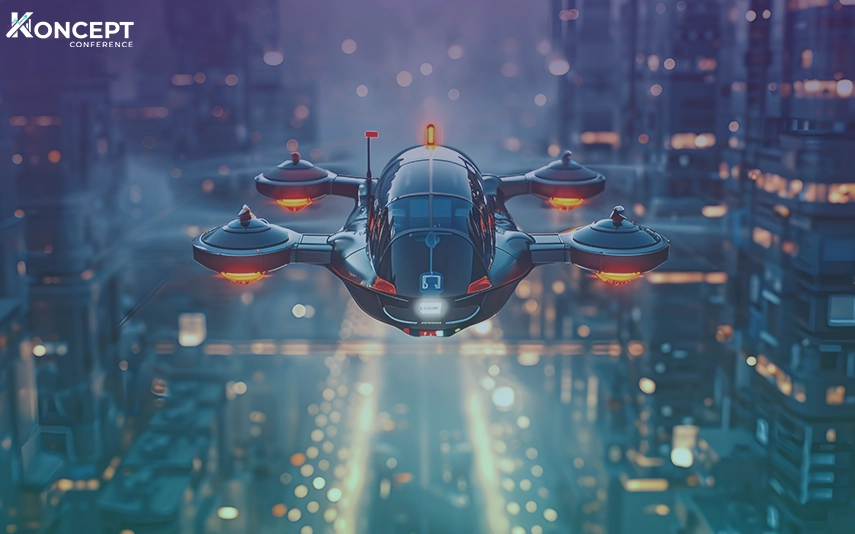
Whenever individuals think of flying taxis, what tends to come into mind is sci-fi cars. The reality appears more realistic and down to earth. The majority of designs are similar to tiny helicopters having more than one rotor and electric propulsion.
These planes are aimed at short-range flights in the cities, which perfectly fit the objectives of urban air mobility. They are meant to minimize noise, enhance efficiency, and be safe in crowded areas. This renders them more applicable in daily use as compared to the conventional helicopters.
Technology Driving the Shift
The key to ensuring that this concept is feasible is technology. The concept is supported by electric propulsion systems, lightweight materials, and sophisticated navigation tools.
The innovation in batteries is still aimed at enhancing range and reliability and makes urban air mobility a viable alternative. Also developing autonomous flight systems, but human control might be involved in operations in the near future.
Advances in automation imply that pilots might eventually no longer be directly involved with control but instead be supervisors.
Infrastructure Will Shape Adoption
Flying taxis are not going to manifest themselves just in the night. Cities must have facilities to facilitate takeoff, landing, and maintenance. These, commonly known as vertiports, would be a part of urban landscapes.
Urban air mobility requires careful planning in order to run smoothly. Governments must take into account such aspects as safety areas, traffic, and interconnection with the current transport infrastructure. It is on this basis that even sophisticated technology would not be able to scale.
Regulations and Safety Expectations
In any transportation system, safety is a concern. Aviation regulators are already discussing the models of the regulation of low-altitude air transportation in urban areas.
There would be stringent rules that would define the way in which air mobility in the city is executed. These are air traffic management, the standards of pilot training, and emergency response. The success of these measures in developing and performing over time is important in order to ensure public trust.
Cost and Accessibility Challenges
Integrating new technology early is likely to be expensive. The use of flying taxis can first be in the premium or business travel segments.
In the long term, cost reduction through an increase in production scale and efficiency might result in increased access to urban air mobility. Shared ride models can also assist in sharing the costs as ride-sharing platforms transform ground transportation.
Environmental Impact Considerations
The concept of sustainability has a significant contribution in the mobility solutions of the future. Electric flying taxis seek to minimize the emissions as opposed to the conventional aircraft.
Nevertheless, sources of energy and battery manufacturing have an effect on the overall effect. To ensure that urban air mobility is in line with the sustainability goals, the incorporation of clean energy would have to increase with the advancements in technology.
Public Perception and Adoption Curve
Innovations in transportation are very likely to be doubted. Individuals might experience doubts in terms of security, sound, and durability.
The slow introduction and regular execution might develop trust in air mobility in the city. Already demonstration projects and pilot programs allow people to learn about the ways in which these systems can be incorporated into everyday life.
Will Flying Taxis Become Mainstream?
Popularity does not often occur overnight. It develops in phases, with niche application cases, and grows as time goes by.
The prospects of flying taxis are promising, but urban air mobility is challenged by the infrastructure, cost, and regulation. As the steady development goes on, such services can be made an option in big cities within 10 years.
What the Future Might Look Like?
Suppose one takes a flight within the city and just over a short distance and thus does not need to be encumbered by the traffic. This situation could not be far off, as it will turn into a regular routine.
With the changing state of transportation in the air, it might transform the way the cities will structure their transport systems. The combination with other existing networks would be important to facilitate the experience to be efficient.
Conclusion
Flying taxis represent more than a technological upgrade. They reflect a shift in how people think about movement in urban spaces.
While challenges remain, urban air mobility continues to gain momentum. With thoughtful development and careful planning, it may transition from a bold idea to a practical part of everyday life.
Step into the future with the Koncept Conference and explore where technology meets innovation.
Interesting Reads:
Brain-Computer Interfaces: Controlling Devices with Thoughts
API-First Development: The Unspoken Trend Driving Future Technology