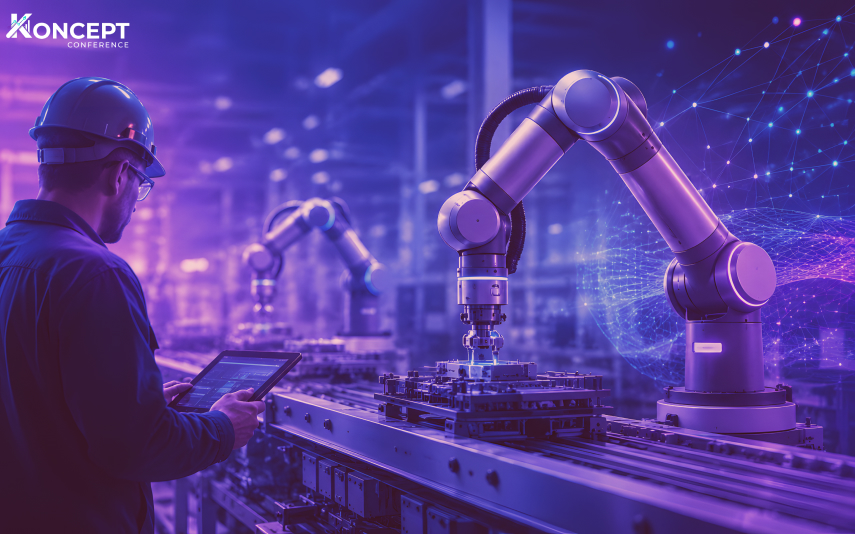
How Collaborative Robots Are Changing Manufacturing
June 29, 2026
Manufacturing continues to evolve as technology reshapes how businesses approach production. The collaborative robots, also known as cobots, are one of the most relevant advances and are changing the way traditional workflows are done. Cobots collaborate with humans and are more flexible and efficient than traditional industrial robots.
What Are Collaborative Robots?
Cobots are robots that are developed to work side by side with people in shared areas. They take care of repetitive and physically demanding jobs, while workers work on constructing a solution, being creative, and making decisions. These are easy to use and have safety features that make them suitable for all types of facilities and plants.
Cobots typically require less skill to operate or program, which is great for organizations looking to be more flexible. These can be easily modified by teams to fit the evolving production needs without having to pass through excessive downtime and boost the operational responsiveness.
Improving Efficiency on the Production Floor
The opportunity to improve productivity is one reason why manufacturers have increasingly turned to robotics companies that are collaborating with their robots. The use of cobots is demonstrated to help reduce errors and enhance the product's quality by executing repetitive tasks with consistency and precision. Various manual operations like inspection, material handling, packaging, and assembly can benefit from automation assistance.
Employees have better-balanced job demands, too. Employees could prioritize quality control and process enhancement activities instead of getting caught up in repetitive tasks that can take hours to complete. Mutual use of man and machines forms a more streamlined manufacturing process.
Enhancing Workplace Safety
This safety is always in focus during the manufacturing process anywhere. Collaborative robots have sensors and advanced monitoring capabilities that are capable of sensing and reacting to human presence. These features help minimize risks associated with manual handling and repetitive strain activities.
One needs to do the appropriate risk assessments and training of employees before implementation. The integration strategy helps ensure the safety of interaction between workers and robotic systems while still achieving productivity targets.
Supporting Manufacturing Flexibility
The present marketplace requires quicker changes in response to customer preferences. This need can be fulfilled with collaborative robots, which enable manufacturers to operate on different tasks when there is little need to stop the work every time they need to change. They are versatile and useful options for product lines and small-batch manufacturing.
Typical automation hardware and components used to implement automation systems are usually difficult to adapt to many new implementations. The downside is that teams can reconfigure them efficiently when their needs change, making Cobots a convenient option.
Addressing Workforce Challenges
The production pressures and need for labor often become very common at manufacturing facilities. Collaborative robots are designed to aid and support, not replace, workers to fill workforce gaps. High levels of productivity require maintaining the need for human expertise.
As technology increases, workers need the chance to acquire new technical skills. The upskilling programs equip teams to handle and optimize high-technology manufacturing processes.
Looking Ahead
As cobots become more common, they are beginning to create a more collaborative production environment. As technology continues to progress, collaborative robots will become even more intuitive, accessible, and capable of providing support for complex manufacturing operations.
Sustainable growth is essential for every manufacturer, where there is a need for solutions that strike a balance between efficiency and worker empowerment. The cobots are an interesting development in the ability to successfully build resilient and future-ready production systems where people and technology can work in harmony.
Join the Koncept Conference and shape the future of technology and healthcare innovation.
Also read:
Urban Air Mobility: Will Flying Taxis Become Mainstream?
Identity and Access Management Trends Shaping Enterprise Security