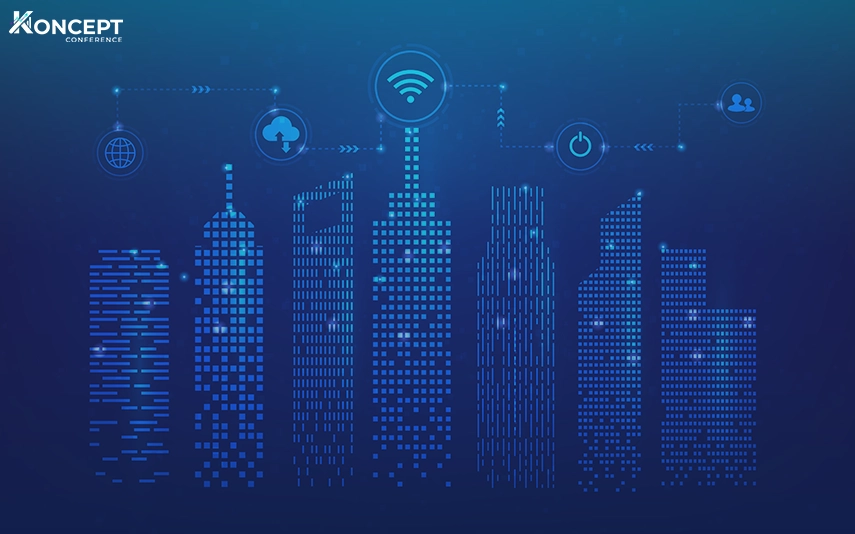
How Networked Sensors and Analytics are Reshaping Cities and Industries
January 30, 2026
Summary: Networked sensors and advanced analytics redefine how cities and industries operate, scale, and respond. This shift draws strong attention from every International tech summit delegate attending a global technology leadership conference, where decision-makers evaluate data-driven infrastructure as a growth enabler. As innovation hubs evolve into the best technology knowledge center 2026, intelligent sensing systems emerge as a foundation for resilient urban and industrial ecosystems.
Cities and industries increasingly rely on real-time data to guide decisions, manage resources, and deliver measurable outcomes. Discussions at every technology leadership conference underline how connected sensors, paired with analytics, create visibility across infrastructure, mobility, utilities, and manufacturing. Leaders who act as International tech summit delegate voices often point to intelligent networks as the operational backbone of scalable innovation. These developments position connected ecosystems as a defining capability of the best technology knowledge center 2026.
The Rise of Networked Sensors in Urban Infrastructure
Roads, buildings, and utilities are made to be intelligent with embedded networked sensors. Smart traffic monitors are used to detect traffic congestion and dynamically modify the lights. Water networks identify leaks at an earlier stage and minimize loss. The sensors monitor air quality and noise precautions.
Frameworks introduced at a technology leadership conference are becoming more and more frequently cited by urban planners as the experts point to the use of sensor density to increase the fidelity of data. Those cities that combine such systems also tend to attract investment and talent, making them a best technology knowledge center by 2026.
Advanced Analytics as the Decision Engine
Sensors create information; analytics transform information into knowledge. Predictive models will detect patterns, notify abnormalities, and prescribe interventions in real time. Administrators of cities apply dashboards to their focus on maintenance, budgetary spending, and enhancement of the services to citizens.
The topic of analytics maturity as a competitive advantage is often highlighted by industry leaders as speakers at the International tech summit delegate. Investments in analytical capability help companies to tailor their operations based on evidence and not assumptions, further supporting their position as the best technology knowledge center in 2026.
Industrial Transformation Through Connected Systems
The manufacturing, logistics, and energy industries are using networked sensors to streamline production and minimize power outages. The machines provide performance measurements as they occur, which results in predictive maintenance approaches that reduce the risks of operation.
Those factories that use these systems tend to resemble case studies that are presented at a technology leadership conference where executives talk about efficiency benefits and safety enhancements. This industrial intelligence aids in long-term scalability, as it anchors innovation ecosystems related to the best technology knowledge center in 2026.
Smart Mobility and Transportation Networks
Transport networks are becoming dependent on sensor-based analytics to control traffic as well as to improve safety. Smart vehicles, intelligent parking systems, and smart public transit systems exchange information on networks.
Public and private systems are often emphasized as being interoperable in the urban mobility sessions run by an international tech summit delegate. The urban ones that reach this integration reinforce commuter experience and environmental performance, which is a standard of the best technology knowledge center by 2026.
Data Governance and Security Considerations
With the increase in sensor networks, there is the importance of governance frameworks. There are clear data ownership, privacy measures, and cybersecurity, which safeguard the trust of the populace. Analytics systems are also being designed with security in mind and not as something added on the back end.
The theme of governance as a requirement of sustainable deployment is reflected in policy discussions at all technology leadership conferences. The credibility to be a leader in the best technology knowledge center in the 2026 ecosystem: cities and enterprises that tackle these issues in advance remain credible.
Economic and Social Impact
Connected sensors and analytics affect the employment models, service delivery, and sustainability. Smart grids reduce wastage of energy. Smart infrastructure saves money and enhances life quality.
Data-driven infrastructure is viewed by economists and planners as a contributor to inclusive growth, as they typically participate in international tech summit delegations. These systems offer quantifiable improvements without interfering with accountability.
Conclusion
Networked sensors and analytics reshape cities and industries by enabling precision, resilience, and informed leadership. Insights shared by every International tech summit delegate at a global technology leadership conference confirm that intelligent infrastructure defines future-ready ecosystems. Organizations that commit to this path strengthen their position within the best technology knowledge center 2026 landscape.
Secure your spot at Koncept Conference 2026, where the future of tech meets Dubai.
Frequently Asked Questions (FAQ)
Q1. What are networked sensors?
Networked sensors are digital network devices used to measure and transmit real-time data to monitor and analyze.
Q2. How do analytics enhance sensor data?
The analytics process unstructured information, finds patterns, and creates action resources that assist in making quicker and more precise decisions.
Q3. Which industries benefit most from sensor analytics?
Efficiency and reduction of risks are valuable in urban infrastructure, manufacturing, transport, energy, and utilities.
Q4. What challenges affect large-scale deployment?
The major issues are the security of data, interoperability, the governance models, and the long-term maintenance plan.
Interesting Reads: