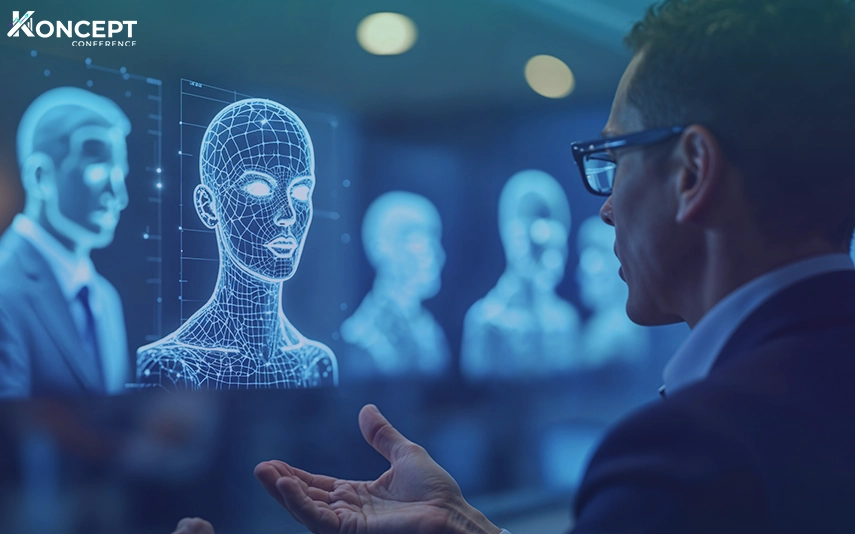
Human-in-the-Loop: Balancing AI Power with Human Judgment
December 24, 2025
AI systems now influence decisions across hiring, finance, healthcare, security, and customer experience. Algorithms process vast volumes of data at speeds no human matches. Still, intelligence without judgment often leads to blind spots. Context, ethics, and accountability remain human strengths.
This is where Human-in-the-Loop becomes essential. It is not about slowing innovation. It is about guiding intelligence with intent. When humans and AI collaborate, organizations gain precision without losing perspective. That balance shapes resilient systems that earn trust and deliver long term value.
Understanding the Human-in-the-Loop Model
At its core, human-in-the-loop is associated with the systems in which human judgment is involved in the decision-making process of AI. Outputs are reviewed by humans and are corrected, and feedback is provided, which enhances learning models in the long run.
This model views AI as a partner and not as an authority. Machines analyze patterns. Humans interpret meaning. They jointly make decisions based on data and values.
Such collaboration maintains intelligence on a real-world level.
Why Fully Automated Intelligence Falls Short?
Efficiency is assured with automation. However, complete freedom causes the possibility of danger when systems are not regulated. Computer algorithms are based on previous information, which is usually subject to bias, gaps, or outdated assumptions.
AI does not challenge any pattern; it just reinforces it without human intervention. It maximizes accuracy measures with omission of social, cultural, or ethical ramifications. That is the gap that makes organizations more and more concerned with human-in-the-loop frameworks.
The accountability is kept transparent through human intervention. It makes learning relevant to changing reality and not snapshots of data as well.
Human Judgment as a Strategic Advantage
Human judgment brings context, empathy, and foresight. These qualities shape decisions beyond numbers. This layer is essential in high-stakes or regulated environments.
Take into account such cases as credit approvals, medical diagnostics, or content moderation. Artificial intelligence determines likelihoods. Human beings are interpreters of consequences. Such a dynamic helps organizations to avoid reputational risks and non-compliance.
Human-in-the-loop models place judgment in the position of a strategic asset and not as an operational bottleneck.
Designing Effective Human-in-the-Loop Systems
Good designing starts with good clarity. Teams establish the position of human contribution of value and automation that contributes efficiency. Not all decisions need to be reviewed. Critical decisions do.
Effective systems have human checkpoints at critical points like data labeling, model validation, exception handling, and continuous learning. Feedback loops remain straightforward and implementable.
Companies that invest in training enable the teams to communicate with AI products with confidence. Such trust will speed up adoption yet maintain control.
Trust, Transparency, and Accountability
The adoption of AI depends on trust. Users trust systems that explain reasoning and invite correction. Human-in-the-Loop enhances transparency by making decisions reviewable and traceable.
Accountability is not abstract but is collectively held when human beings legitimize the results. Leaders also get exposed to the emergence of decisions and changes in decision-making.
This transparency augments the governance models and harmonizes innovation with morality.
Scaling Intelligence Without Losing Control
With the size of AI, the complexity increases. Increased data, increased models, and increased decisions. Large-scale human interaction is to be orchestrated but not intervened with.
Organizations ensure this balance by focusing on the high-impact situations to be reviewed by humans and letting go of automation of routine tasks. This level of approach maintains velocity and control.
Human-in-the-Loop is an intelligent approach that is scalable and capable of adapting to organizational values.
Preparing Teams for Collaborative Intelligence
Human beings determine even more than technology. Teams should have role, responsibility, and decision authority. Having known how AI can assist their work, humans stop resisting.
Upskilling is more about interpretation, critical thinking, and ethical reasoning and not technical depth. These capabilities go hand in hand with machine intelligence.
Instead of competing, collaboration occurs where human beings view AI as an enhancer and not an eliminator.
Conclusion
AI capabilities continue to advance. Judgment, accountability, and trust remain human domains. The future belongs to organizations that integrate both intentionally.
Human-in-the-Loop evolves from a control mechanism into a design philosophy. It reflects a belief that intelligence works best when guided by purpose.
As enterprises navigate complexity, this balance becomes less optional and more foundational. Intelligent systems thrive when humans stay in the loop, shaping outcomes with insight and responsibility.
Stay tuned with Koncept Conference for more updates!
Interesting Reads:
Decentralized Identity Systems and Blockchain in the Post-Web3
Fail Fast, Scale Faster: Leadership Lessons from High-Growth Tech Companies