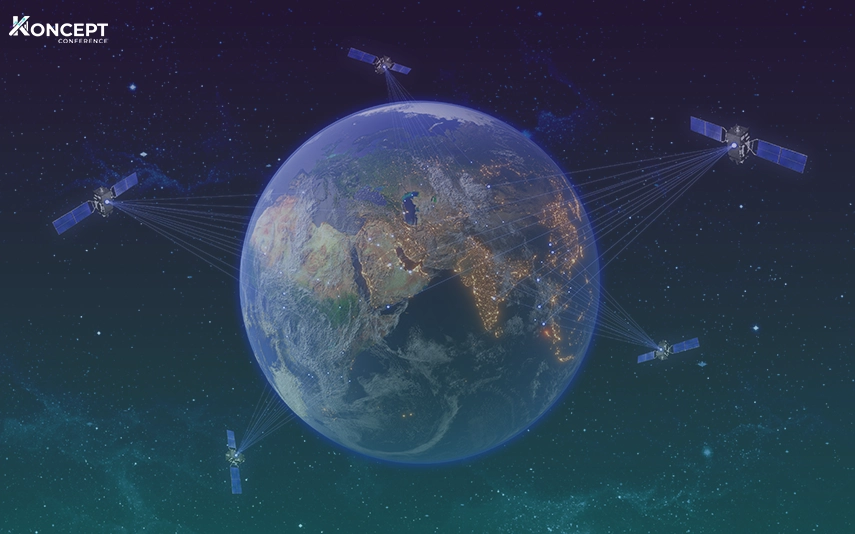
How Low Earth Orbit Satellites Reshape Internet Access
May 26, 2026
Reliable internet access shapes education, business, entertainment, and communication. Many rural and remote regions still struggle with weak signals, unstable networks, and expensive infrastructure. Traditional broadband systems rely heavily on underground cables and large towers, which often fail to reach isolated locations.
Recent developments in Low Earth Orbit Satellites are changing that reality. Smaller satellites are now much closer to the earth and provide more responsive internet connections. This change is ushering in new opportunities for communities, travelers, researchers, and emergency response teams alike.
Why Does the Satellite Internet Look Different Today?
Older satellite internet systems are frequently affected by high delays and variable rentability and dependability. The time it takes for signals to reach from the Earth to space and back retards communication and affects real-time applications like video calls or online games.
The modern satellites are LEO satellites, which will fly at much smaller heights. This means that signals can do shorter journeys, thus increasing speed and minimizing delays. Perfect streaming, call, and surfing quality. This advancement brings satellite web access in closer reach to regular access to the Internet by broadband.
Also, hundreds or thousands of smaller satellites are launched by technology teams instead of a few large satellites. This configuration provides for better coverage and can alleviate the load from one satellite. In most cases, a second satellite will be able to provide back-up if a first unit has technical problems.
Internet Access Reaches Remote Regions
Large parts of the world still lack stable internet infrastructure. In some instances isolated locations (e.g., mountain villages, deserts, forests, islands, and sea-based locations offshore) are not reached by cable due to expensive investments and poor construction situations.
Low Earth orbit satellites enable Internet services for those places where fiber networks might not extend. The remote students have enhanced access to digital learning in the school. Between healthcare workers, the communication process moves quicker with instant communication to specialists. Small companies are linked to a global economy without relying on problematic local networks.
The change also contributes to the recovery process in the case of a disaster. Ground infrastructure often is damaged by storms, floods, and earthquakes. Satellite Internet systems can still communicate even with the loss of the local communication towers. Emergency personnel are informed quicker and action co-ordinated more effectively.
Speed and Latency Continue to Improve
Every person who uses a computer for the Internet would expect an instant response to a request for a website, stable communications on the Internet, and smooth streaming. If there are slow responses, it loses user satisfaction and productivity. The need to move these signals via satellite renders the task difficult to fulfill when the expectations include reliability, speed, high resolution, and other factors.
New low Earth orbit satellites will provide much better latency. The lower the latency, the faster the data will travel between devices. Video meetings go smoothly, games are played over the cloud with better performance, and transactions are conducted quicker. These enhancements are important to both customers and companies.
They are also constantly enhancing the new hardware, antenna systems, and management software for the satellite's signals. As networks grow older, their performance becomes more stable. Future upgrades could provide even faster speeds and will be stronger in congested areas.
Mobility Changes Internet Usage
Today's Web users don't like to remain seated at a single computer. With the rise of remote work, digital nomad days, the shipping industry, and aviation businesses, there is a need for reliable connectivity.
Low Earth Orbit Satellites are much better at providing mobile internet service than older satellites. Ocean crossers' communication is stronger. Among the advantages of aviation flight-day bargains are that they make for smoother internet experiences for the passengers. Businesses that require remote access to the internet can easily keep in touch without the need to rely on local infrastructure.
Challenges Still Shape the Industry
Although the satellite Internet has made great advances, there are a few challenges. Thousands of satellites have to be launched and operated with a significant amount of investment. Space traffic also increases as more objects enter orbit, raising concerns about debris and long term sustainability.
Spectrum considerations and network environmental and regulatory concerns are also happening as increasing networks of low Earth orbit satellites are deployed. There are worries that light pollution has a negative impact on night sky observations.
What the Future Internet May Look Like?
The internet's infrastructure is going through significant transformation right now. Fiber networks, wireless, and satellite communication are getting ready to work together rather than in direct competition. This combined method generates power and flexibility in the connectivity.
To enhance emergency communication, scientific research, transport infrastructures, and digital inclusion in the future. Internet connectivity that is both reliable and secure isn't solely dependent now on underground cables. Space-based connectivity is increasingly becoming a daily reality.
Conclusion
Internet access continues evolving rapidly, and satellite technology now plays a central role in that transformation. Faster speeds, lower latency, and broader coverage are reshaping how people connect across the world.
Low Earth Orbit Satellites are not simply improving satellite internet. They are redefining how connectivity reaches people, especially in places where traditional infrastructure struggles to expand. As technology advances further, global communication may become more accessible, flexible, and resilient than ever before.
Join Koncept Conference in Tokyo and connect with global innovators shaping the future of technology and healthcare.
Interesting Reads:
The Increase of Developer Experience (DX) As A Driver of Trend in The Tech Industry