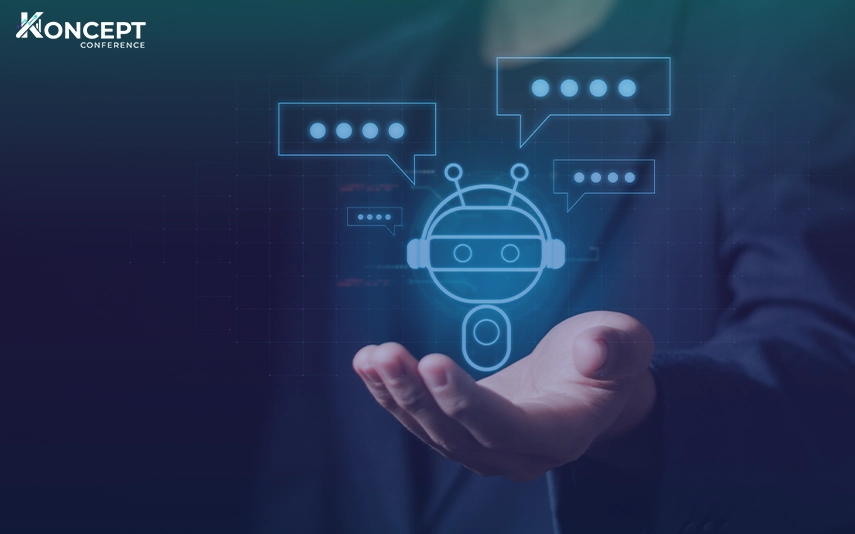
Enterprise AI Agents: Copilots to Decision-Makers
February 13, 2026
There is a silent change that is occurring at boardrooms and also at the back-end systems. What started out as a useful digital copilot, handling emails, summarizing reports, help with code, etc, has now converted into the much more serious. Enterprise AI agents are no longer limited to support functions, but they are more and more assigned the duty of making decisions that affect the revenues, risks, and operational speed. This development is a turning point in technology in the enterprise sector, as AI is not just a tool to help businesses anymore; it is an active component of business performance.
The Disengagement between Assistance and Autonomy
The early AI application in enterprises was meant to enhance human productivity. They acted as co-pilots: smart assistants that were integrated into productivity suites, CRMs, and analytics. They were based on their ability to increase the speed of their daily operations and give recommendations using past data. Although these systems were effective, they nonetheless needed human control at almost every stage.
The current devices which are powered by AI in the enterprise are constructed on more robust architecture that allows them to be context aware, memory retentive and goal oriented. These agents are able to carry out multi-step workflows, cross system coordination and make decisions according to established governance structures as opposed to merely responding to prompts. As an example, an AI agent in the supply chain management system may track inventory, predict demand changes, and automatically order materials, just increasing the number of exceptions being reported to the human managers.
This transition of reactive help to proactive decision-making is redefining the way organizations look at the issue of automation.
The Reason Enterprises are Adopting AI Agents
There are a number of forces that are driving enterprise AI agent adoption. To begin with, the amount and density of information produced by contemporary organizations have exceeded the ability of humans to process it. Businesses need systems that are able to synthesize information in real time and take action on the same. The AI agents close this gap by analyzing both structured and unstructured information continuously, forming patterns, and making decisions that are in line with the strategic objectives.
Second, operation efficiency and speed is required by the competitive pressure. Firms being purely manual have a risk of being left behind by more agile firms with AI-enhanced work process. Enterprise AI agents facilitate quick cycle time in customer service, financial forecasting, IT operations, etc. An example is that the agents who handle support can solve support tickets automatically with AI, decreasing the time of response and operational expenses without compromising the quality of services.
Third, progress in large language models and coordination systems has simplified the process of connecting AI agents to enterprise ecosystems. Such agents have the ability to communicate with APIs, databases, and enterprise software among others, enabling them to be digital operators as opposed to standalone tools.
The Major Strengths of the Modern Enterprise AI Agents
The current agent of AI in enterprise is characterized by a number of capabilities:
1. Contextual Understanding:
Complex instructions can be interpreted and organizational context can be comprehended as well as memory can be retained across interactions amongst agents. This will enable them to work in the long workflow as opposed to one time jobs.
2. Decision-Making Among Bridgeposts:
Businesses create rules and limits according to which the extent of agent autonomy is determined. Under these parameters, AI agents have the ability to decide, either to approve transactions or allocate resources or to change strategies, which has to comply and risk control.
3. Cross-System Orchestration:
AI agents can be described as bridges between different systems. It is possible to access information on one platform, process it, and initiate the actions on another and efficiently act as digital process administrators.
4. Constant Improvement and Adaptation:
Agents adjust their behaviors in response to feedback and performance measurements through performance checking. This is a continuous enhancement that allows them to provide more precise and effective results.
Challenges and Governance Issues
Enterprise AI agents have new governance issues, despite the promise. Companies should make sure that they are transparent, accountable, and secure in their agent-based decision-making. Audit trails, human-in-the-loop, and sound testing frameworks are necessary to keep the trust and compliance.
Another important issue is data privacy. In order to work effectively AI agents often need access to sensitive information. To reduce risk, enterprises need to enforce stringent data governance regulations and enforce safe integration strategies.
Besides, workforce adaptation is among the considerations. Instead of substituting employees, AI agents are transforming roles. Professionals are moving to oversight, strategy and exception management and hand over decision routine making to intelligent systems.
Strategic Implication on Business
The emergence of enterprise AI agents is a harbinger of more even-handed change in the operations of organizations. Decision-making is becoming decentralized, evidence-based, and up to date. The leaders can be preoccupied with the high-level strategy whereas the AI agents deal with the execution of operations. This interaction generates a hybrid workforce in which human and AI work together to get results that neither could have achieved individually.
The measurable benefits are already being seen in such industries like finance, healthcare, manufacturing and retail. Enterprise AI agents are transforming enterprise operations to be smarter, faster, and more scalable, whether through automated compliance checks, predictive maintenance and individualized customer engagement.
Looking Ahead
The trend is evident: the enterprise AI agents are going to keep acquiring autonomy and sophistication. Organizations will increase the range of their activities beyond the support of operations to the support of strategy as the confidence in these systems increases. The most prosperous businesses will consist of the ones that will be innovative and at the same time governed, so that the AI agents are characterized by clear ethical and functional limits.
The AI age of a mere copilot is disappearing. A new generation of smart agents is being born in its place, able, responsible and gradually becoming the main focus of the operation of modern businesses. Visit at- Koncept Conference
Interesting Reads:
The Hidden Costs of Running Large Language Models at Scale
Diversity-Driven Innovation: The Reason Why Inclusive Leadership in Tech Performs Better